
Trenton, NJ · Garage Door Service
Attached or Detached: It Changes What Your Door Needs
Trenton's housing runs 1938 to 2004, mostly attached ranch and split-level garages. Here's how that construction era and cold winters change what a door needs.
- Repairs & new doors
- Springs & openers
- Serving 7 nearby communities
The Problem
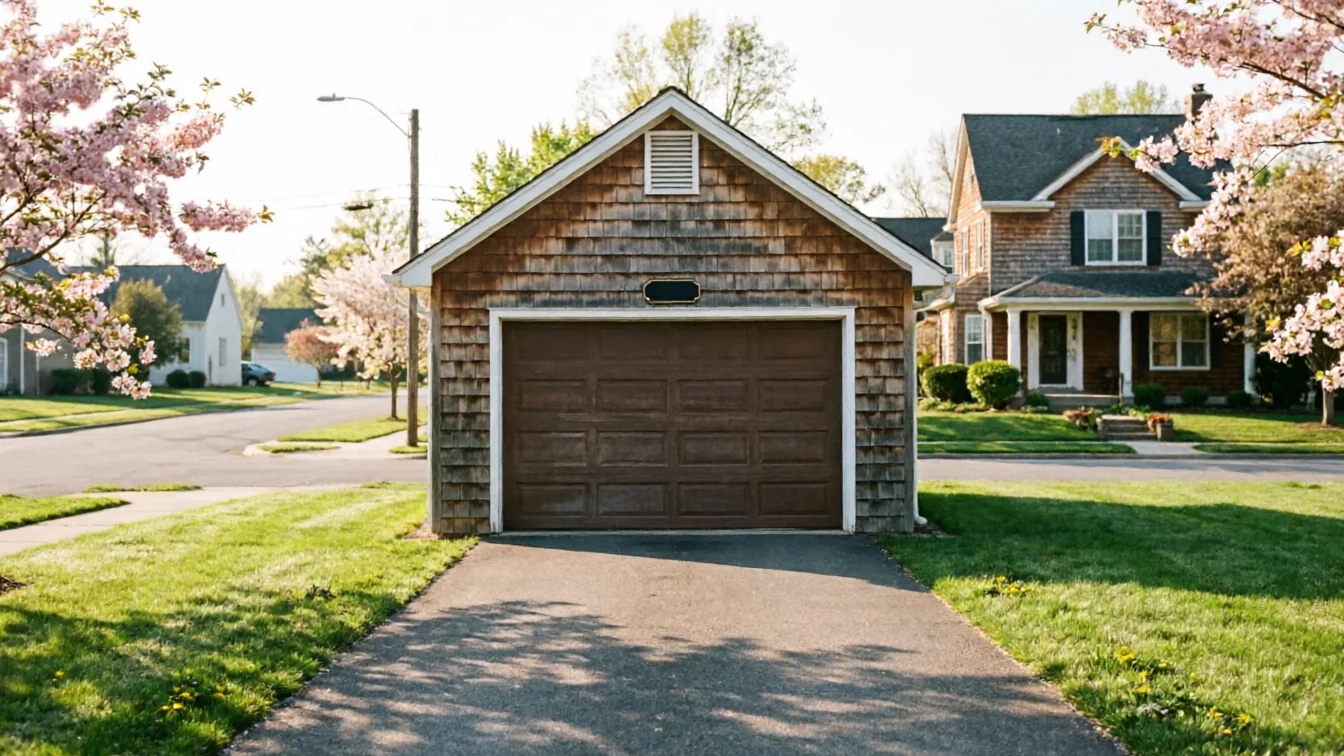
Most of the housing in this service area went up between 1938 and 2004, with the median build year landing around 1968. That matters more than people think when it comes to garage doors. A lot of what got built in the 1960s and 70s across the 57 named areas we work in came with an attached garage tucked under the main roofline, usually a single bay feeding straight into a mudroom or kitchen. Older housing stock and a smaller share of newer construction carries a detached garage sitting off to the side or back of the lot.
The problem is that people treat these two setups the same when they call about a door, and they aren't the same. An attached garage shares a wall, sometimes a ceiling, with living space. A detached one doesn't share anything with the house except the driveway. That changes what kind of insulation makes sense, what kind of noise matters, and even what a broken spring means for your week. A double torsion spring failing on an attached garage under a bedroom is a different problem than the same failure forty feet from the back door.
What the Weather Here Does to It
This area sits in a climate band that runs cold and severe for a good stretch of the year. On an attached garage, that cold has somewhere to go - straight through a shared wall into the house if the door and the surrounding jambs aren't sealed well. Owners of the ranch and split-level homes common to the 1960s-70s stock often notice the laundry room or the room above the garage running colder than the rest of the house, and the door is usually part of that story, not the whole of it.
On a detached garage, the cold does something different. There's no adjoining room to steal warmth from, so a thin or old door just lets the whole structure track outdoor temperature. That's fine if you're storing a car and some tools. It's not fine if the detached garage has become a workshop, which happens a lot on older lots in this area. Panels that were serviceable in 1975 are now 50 years into cold cycling, and steel that flexes with every freeze-thaw eventually fatigues at the seams, whether anyone's using the space hard or not.
The Common Mistake
The mistake we see most is homeowners buying or replacing a door based on the opening size alone, without factoring in which garage type they have. An attached garage in this area usually wants a door rated for insulation, because it's doing double duty as a thermal barrier for the house, not just a cover for the opening. People skip that and end up with a door that fits fine and performs poorly - the house stays colder near the garage wall no matter what the furnace does.
On a detached garage the opposite mistake shows up: people over-spend on heavy insulated doors for a structure that was never meant to be climate-controlled, when a standard door with decent weatherstripping would have done the job for less. Given that median household income here runs a bit above $107,000 and most owners we talk to are weighing the actual cost against the actual use of the space, matching the door to the garage type - not just the opening - is where the money gets spent well or wasted.
When Waiting Is Fine
Not every issue needs a same-week call. If you've got a detached garage from the older end of the 1938-2004 range and the door is just stiff in cold weather but still opens and closes under power, that's often a lubrication and track-alignment issue, not a failure. It can wait for a slower week.
Attached garages get less slack from us, honestly. A door that's binding, dragging, or making a new noise on a garage that backs onto living space is worth a look sooner, because a spring or cable failure there can mean a door stuck half-open against a cold house for days, not just a cold garage. We'll say plainly that we don't do emergency same-day work as a blanket promise - we tell people what we can get to and when, and a lot of the cold-weather calls we take are preventable maintenance that got put off one winter too many.
Frequently asked questions
Does my garage door need to be insulated if the garage is attached to the house?
In most cases here, yes. Homes built in the 1960s-70s wave that makes up a lot of this area's stock often have the garage sharing a wall or ceiling with living space, so an uninsulated door becomes a cold spot for the whole house, not just the garage.
Is a detached garage door held to a different standard?
Functionally, yes. A detached structure isn't sharing heat with the house, so the door's job is weather and security, not thermal performance. A standard door with good weatherstripping is usually enough unless the garage is used as heated workshop space.
My house was built in the 1960s - does that affect what door will fit?
It can. A lot of the attached single-bay garages from that era have narrower openings and older track hardware than what's standard today, so measuring before ordering matters more than on a newer build.
Related garage door services in Trenton
More garage door guides
Book garage door service in Trenton
Call now or request a quote - tell us what the door is doing and where you are.