
Trenton, NJ · Garage Door Service
When the Power Goes Out, Your Opener Tells You How Old It Is
Trenton's housing dates mostly to 1968, and winter power outages hit a COLD-severe climate hard. Here's what that combination actually does to your opener.
- Repairs & new doors
- Springs & openers
- Serving 7 nearby communities
The Problem
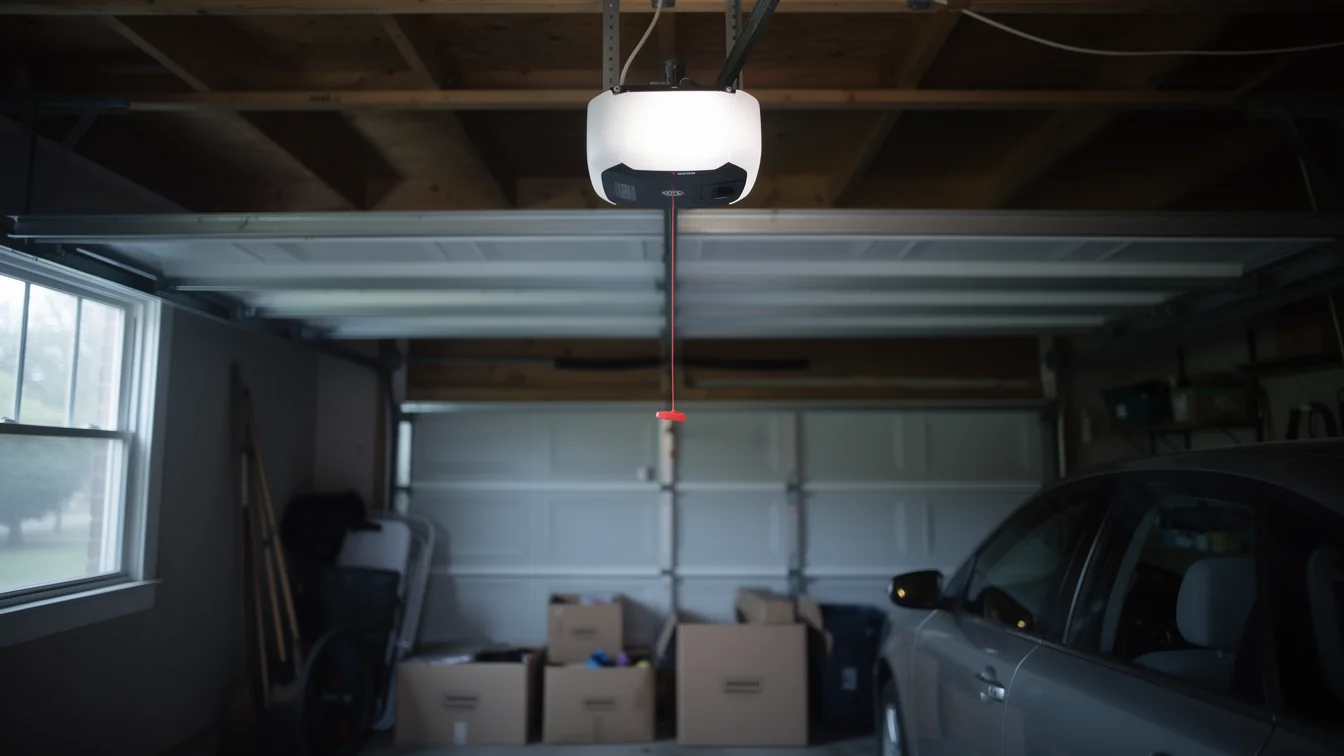
Most of the houses in this area went up between 1938 and 2004, with the typical one sitting right around 1968, which means a lot of openers here are still the chain-drive units that shipped without any battery backup at all. When the power outages, those openers just stop. No chime, no slow descent, nothing. The door sits wherever it was when the juice died, and if that's halfway up, you've got a gap into the garage until someone pulls the manual release.
Across the 57 named areas we cover, the bulk of the housing stock dates to the 1960s and 70s, so the garage wiring behind that opener is often original to the house too. That matters more than people think. An opener installed in 1975 wasn't built to survive forty years of voltage spikes, brownouts, and the occasional lightning hit on a transformer down the block. The motor might still turn. The logic board that remembers your remote codes and limit settings is usually the first thing to go quiet, and it often goes quiet during the exact storm that knocked your power out in the first place.
What the Weather Here Does to It
This part of New Jersey sits in a climate band rated COLD and severe, which means winter power outages aren't rare, they're routine. Ice on the lines, heavy wet snow on branches, a hard freeze that snaps a feeder somewhere upstream - any of it takes the opener down with the rest of the house.
Cold does something else too, separate from the outage itself. It drains battery backup units faster than their rated capacity suggests, so a backup that's supposed to carry you through a short outage in October might give out in half the time in January. If your opener already runs on an older board from a 1960s-70s install, the cold also makes the gears and lubricant stiffer, so even once power's restored, the first cycle or two can sound rough or run slow before it settles back in. None of that means the unit is failing. It means it's cold, and it's old, and those two things compound.
The Common Mistake
The mistake we see most is someone trying to force the door with the opener still engaged during an outage, hammering the wall button or the remote hoping it'll catch. It won't. No power means no power, and mashing the button just wears the switch contacts for no reason.
The second mistake is not knowing where the manual release cord is, or having one that's been painted over or buried behind storage for years. When the power's out, that cord is the only way to move the door by hand, and finding it at 11pm during a storm is not the time to learn it's stuck.
The third is leaving the door wherever it stopped overnight because nobody wants to deal with it until morning. Given the climate here, an open or half-open door left through a winter night invites more than cold air - it's an easy entry point, and pipes near the garage wall don't appreciate the draft either. Pull the release, close it by hand, and sort the opener out once power's back.
When Waiting Is Fine
If the power comes back within an hour or two and the opener fires right back up and runs the same as before, you don't need to call anyone. That's the normal case. The board survived, the motor's fine, you're done.
Where it's worth a call is if the opener comes back on but acts wrong - grinding, running only partway, or not responding to the remote even though the wall button works. On houses with the older 1960s-70s wiring common around here, that's sometimes the opener and sometimes the circuit it's plugged into, and it's worth having someone check before you assume the motor's dying.
One honest limitation: if a power surge actually fried the logic board, we don't always have that exact board on the truck, especially for older motor models no longer in production. Sometimes it's a same-day fix, sometimes it's an order-and-wait, and we'll tell you straight which one you're looking at before we start.
Frequently asked questions
Will my garage door opener still work during a power outage?
Not unless it has battery backup, and most older units in this area don't. Without backup, the opener stops where it is when power outages. You'll need the manual release cord, usually a red handle hanging from the track, to move the door by hand until power's restored.
Why does my opener act strange right after a winter power outage?
Cold stiffens the gears and lubricant, and if the opener's board is from an older 1960s-70s-era install, voltage swings during the outage can leave it running rough for a cycle or two. Usually it settles. If it doesn't within a day, that's worth a call.
Should I leave my garage door open if the opener dies mid-cycle?
No. Pull the manual release and close it by hand. Given the cold-weather conditions here, an open garage invites drafts near any pipes along that wall and leaves an easy way into the house. Don't wait for power to come back to deal with it.
Related garage door services in Trenton
More garage door guides
Book garage door service in Trenton
Call now or request a quote - tell us what the door is doing and where you are.