
Trenton, NJ · Garage Door Service
The Garage Door Problem in Trenton's Older Housing Stock
Most Trenton-area garages went up between 1938 and 1968, before insulation codes existed. Here's what that uninsulated door is costing you through a cold winter.
- Repairs & new doors
- Springs & openers
- Serving 7 nearby communities
The Problem
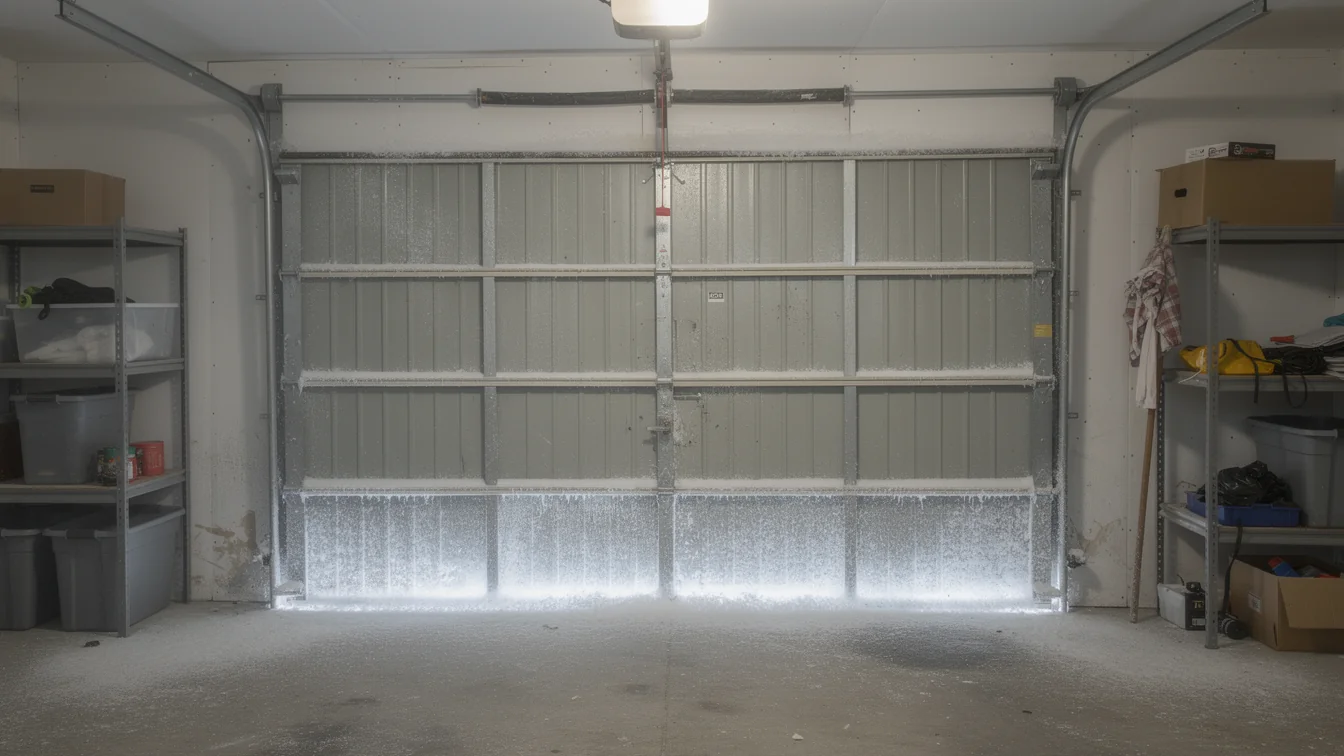
Housing in the Trenton service area was built mostly between 1938 and 2004, with the median year sitting at 1968. That median matters more than it sounds like it should. A door installed on a house built in 1968 went in years before any state or federal energy code required insulated garage doors. What you've got on a lot of these houses, across the 57 named areas that make up this stock, is a single layer of steel or wood with nothing behind it - no foam core, no thermal break at the track, often no weatherseal that still seals. It was never built to hold heat in or cold out, because nobody asked it to at the time. The door still opens and closes, which is why so many owners never look at it twice. But a door that still works isn't the same as a door that's doing its job in a house this old, in a climate this cold.
What the Weather Here Does to It
This area sits in a cold-severe climate band, and that band is hard on a door that was never insulated to begin with. Steel panels from the 1960s-70s era this region is dominated by contract more in deep cold than newer insulated steel does, and on an uninsulated single-layer door that contraction shows up as gaps at the top seal and along the sides - gaps that let wind straight into the garage and, if the garage shares a wall with living space, into the house. Torsion springs on these older setups also lose tension faster in sustained cold, since the steel itself is less forgiving at low temperatures than it is in summer. On a house from this era with a door that's never been touched, cold-weather spring failure isn't rare - it's closer to a schedule. The track hardware on these original installs is usually side-mounted, a style this region's 1960s-70s builders favored, and it wasn't designed with modern roller seals that handle ice and road salt buildup well.
The Common Mistake
The mistake we see most in this older housing stock is treating an uninsulated door like a maintenance problem instead of what it actually is: a door built to a standard that no longer exists. Owners replace a cable, lube a hinge, swap a sensor, and call it fixed - and for a season, it is. But none of that touches the core issue on a door from the 1968 median era: there's no insulation layer to add after the fact that performs like a factory one, and the panel-to-frame tolerances on these original installs were never built for the sealing hardware that's standard now. We'll do the small repair if that's genuinely what the door needs. But on a door this old, patching the symptom and ignoring the build era usually means the same homeowner calls again next winter with the same gap, the same draft, and a spring that's now a year closer to failing in the cold.
When Waiting Is Fine
Not every older door needs to come out right now, and we won't tell you otherwise. If the panels aren't warped, the track is still true, and the only issue is a worn weatherseal or a slow opener, that's a repair, not a reason to replace a door that's otherwise sound - even one built decades before insulation codes existed. Waiting is also fine if the garage isn't attached to conditioned living space, since the thermal loss matters a lot less when there's no heated wall on the other side of it. Where we'd tell you not to wait is a door that's already showing hardware fatigue in a cold-severe climate like this one - a spring that's cycling louder, a track pulling slightly at the top. That combination tends to fail on the coldest night of the year, not the mildest one.
Frequently asked questions
Why does my garage door feel so drafty in winter?
If your house falls in the common build range for this area - 1938 to 2004, with most around 1968 - your door likely predates insulation codes entirely. A single steel or wood layer with no foam core does almost nothing to block cold, and in a cold-severe climate like this one, that gap is why the garage, and sometimes the attached wall, feels colder than the rest of the house.
Should I just add insulation panels to my old door myself?
You can, but it won't perform like a factory-insulated door. The frame tolerances on doors from the 1960s-70s era common here weren't built around an added insulation layer, so gaps at the seal usually remain even after a DIY kit goes in. It helps some. It doesn't fix the core issue.
Is a cold-weather spring failure actually more common on older doors?
On uninsulated steel from this region's dominant build era, yes. Steel contracts more in sustained cold when there's no thermal break, and torsion springs under that steel lose tension faster in a cold-severe climate. It's not universal, but it's common enough on houses from the 1968 median era that we see it every winter.
Do you replace doors that are just drafty, or only ones that are broken?
We'll tell you honestly which one you've got. A drafty door with sound panels and a true track is usually a repair - new seal, maybe a new bottom astragal - not a full replacement. We don't push a replacement on a door that doesn't need one.
Related garage door services in Trenton
More garage door guides
Book garage door service in Trenton
Call now or request a quote - tell us what the door is doing and where you are.