
Trenton, NJ · Garage Door Service
Safety Sensors and Why They Keep Drifting in Trenton Homes
Why garage door safety sensors in Trenton homes drift out of alignment, tied to this area's 1960s-70s housing stock and cold winters. From Trenton Garage Door Pros.
- Repairs & new doors
- Springs & openers
- Serving 7 nearby communities
The Problem
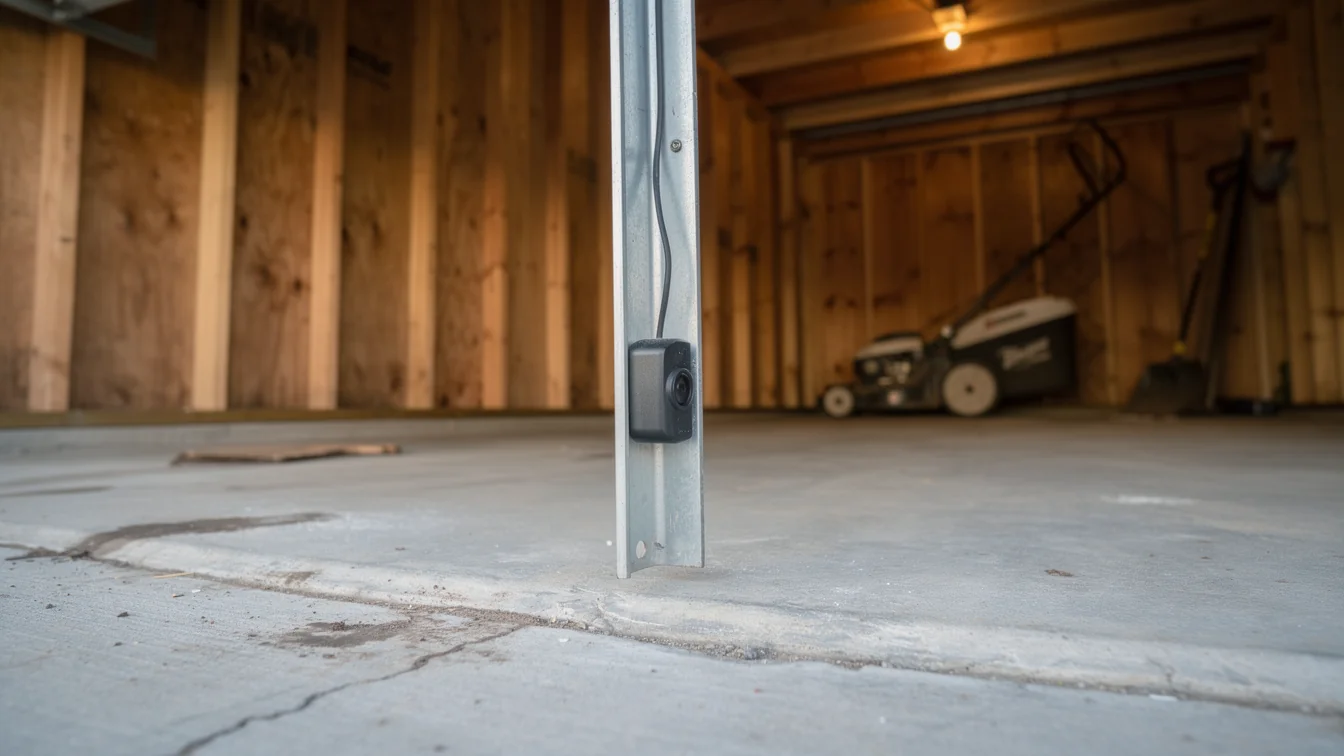
Every opener built since the mid-1990s has two safety sensors, one on each side of the track, about six inches off the slab. They talk to each other with an infrared beam. Break that beam and the door has to stop or reverse. When the brackets holding those sensors move even a quarter inch, the beam misses and the opener refuses to close, or it closes and kicks back up for no obvious reason.
In a lot of the houses we get called to around Trenton, the sensor brackets were never bolted to the main framing at all. Homes built here between 1938 and 2004, with most of the stock going up in the 1960s and 70s, usually have garage framing added or altered after the original build, and the sensor brackets often got screwed into trim boards or thin jamb extensions rather than solid studs. Those lighter attachment points move more than the door frame around them, and the sensors go with them.
The fix sounds simple, re-aim the sensors, but if the bracket itself is loose or the wood behind it has shifted, re-aiming only holds until the next hard freeze or the next time someone backs a car into the frame.
What the Weather Here Does to It
Trenton sits in a severe cold climate band, and that matters here more than people think. Framing lumber and the trim boards sensor brackets are often screwed into expand and contract with every freeze-thaw cycle through the winter. On a house built in the 1960s or 70s, that wood has fifty-plus years of moisture cycles behind it already, and it doesn't sit as flat as it used to.
What we see is a seasonal pattern: sensors that aimed fine in October start throwing false reversals by January, then seem to fix themselves in the spring. It isn't the sensor failing, it's the bracket moving a hair with the cold and moving back as things warm up. On newer construction with engineered jamb lumber this is less of an issue, but a lot of what's standing in Trenton predates that kind of material, so the seasonal drift shows up more often and more reliably than it would on a newer frame.
The Common Mistake
The mistake we see most is replacing the sensor instead of the bracket. A homeowner notices the opener won't close, swaps the sensor unit off the shelf at a hardware store, and it works for a few weeks. Then the same symptom comes back, because the new sensor is screwed into the same loose trim board that caused the problem in the first place.
The other mistake, more specific to older Trenton-area garages, is aiming the sensors by eye without checking what they're actually screwed into. If the jamb extension behind the bracket has any play in it, no amount of careful aiming solves anything permanently. We open the trim, find solid framing or add a backer block, and remount into that. It takes longer than swapping a sensor, but it's the only version of the fix that survives a winter.
When Waiting Is Fine
Not every drifting sensor needs an emergency call. If the door still closes most of the time and only throws the occasional false reversal, that's a nuisance, not a safety issue, and it's fine to live with it until you can get a tech out on a normal schedule. The one time we'd say don't wait: if the door reverses while something is actually under it, not falsely, because that means the sensor or the opener's force settings aren't doing their job and a kid or pet could get caught under a closing door.
We'll also say plainly that re-mounting a bracket into solid wood isn't always worth it on a garage that's due for a full frame repair anyway. If the jamb is rotted or racked badly enough that nothing holds a screw, chasing sensor alignment is a losing game until the frame itself gets fixed.
Frequently asked questions
Why does my garage door sensor only act up in winter?
On older Trenton-area garages the sensor brackets are often screwed into trim or jamb extensions, not the main framing. That wood moves slightly with freeze-thaw cycles through our cold winters, which shifts the sensor's aim just enough to break the beam. It usually settles down again once temperatures stabilize in spring.
I replaced the sensor and it still won't hold alignment. Why?
If the bracket behind the sensor is screwed into loose trim rather than solid framing, a new sensor will drift the same way the old one did. The fix is usually remounting into solid wood or a backer block, not swapping the sensor unit itself.
Is a garage door that reverses for no reason dangerous?
A false reversal with nothing under the door is a nuisance, not a hazard, and can wait for a regular appointment. If the door ever reverses while something is actually underneath it, that's different and shouldn't wait, since it means the safety system isn't doing its job.
Does the age of my house matter for this problem?
It does. Houses in this area built from the 1960s through the 70s often have garage framing that was altered after the original build, with sensor brackets attached to lighter trim rather than structural studs. That looser attachment point is what drives most of the drift we see.
Related garage door services in Trenton
More garage door guides
Book garage door service in Trenton
Call now or request a quote - tell us what the door is doing and where you are.