
Trenton, NJ · Garage Door Service
Why So Many Trenton Garages Lose Heat at the Door
Trenton homes built between 1938 and 1968 often have worn weather seals letting in cold drafts during harsh New Jersey winters, raising heating bills fast.
- Repairs & new doors
- Springs & openers
- Serving 7 nearby communities
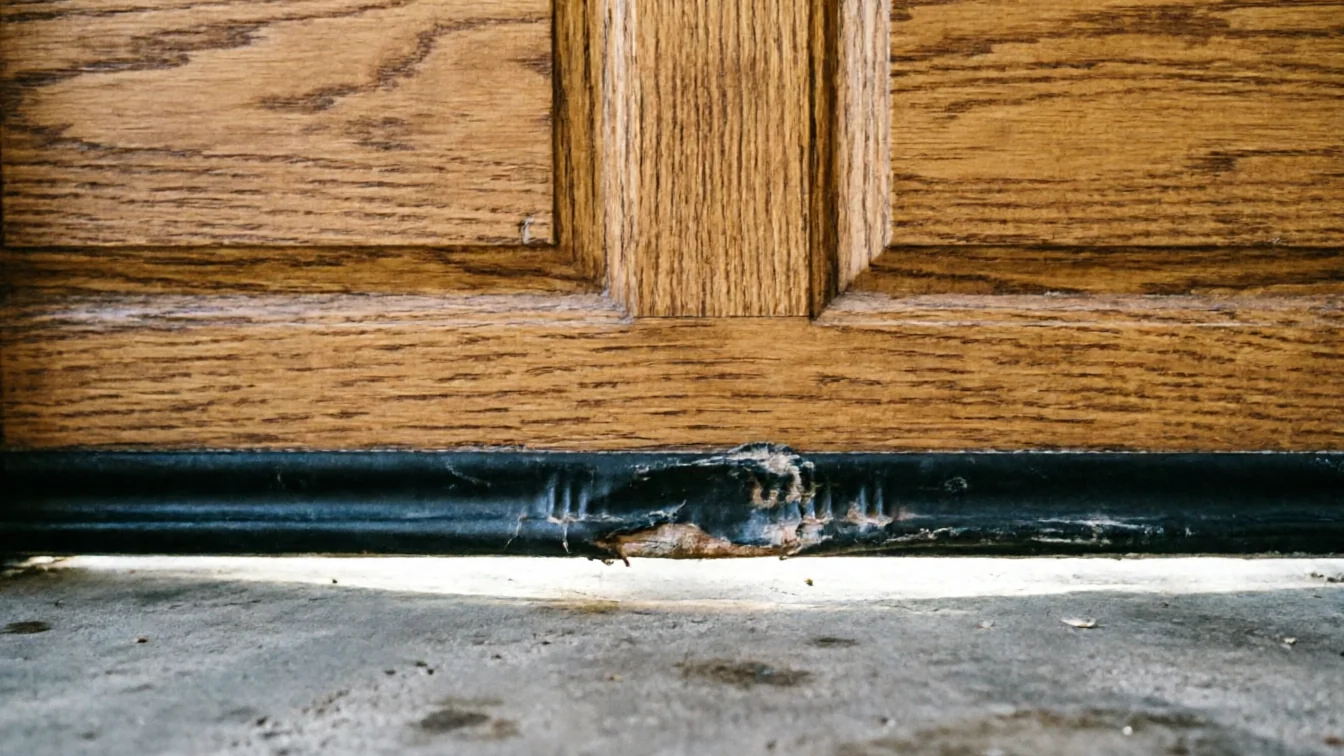
The Problem
Most houses in and around Trenton went up between 1938 and 1968, with the bulk of the stock dating from the 1960s and 70s across the 57 named areas we work in. That means a lot of garage doors here are original or close to it, bolted to jambs that were framed before anyone worried about air sealing a garage. The weather seal - the rubber strip along the bottom and sides of the door - was never built to last fifty years, and on a lot of these houses it's either gone brittle, cracked, or missing outright.
You can usually spot it: a visible gap at the bottom corners, daylight showing through the side jambs, or a draft you can feel standing at the workbench. It's not a dramatic failure. It's slow. The seal degrades a quarter-inch at a time until one day the garage is basically an open box with a motor on it, and the first real cold spell of the season is what finally makes you notice.
What the Weather Here Does to It
Trenton sits in a cold-severe climate band, which means real freeze-thaw cycles every winter, not just the occasional cold snap. That cycling is hard on rubber and vinyl seals specifically - they contract in the cold, lose flexibility, and crack at the exact spots where the door meets the slab or the jamb.
On a house built in the 1960s with original hardware, the bottom seal track has usually shifted a little over the decades too, so even a brand-new seal doesn't sit flush anymore. The gap lets in cold air, and if there's a water heater, furnace, or anything else in that garage that doesn't like freezing, you'll notice it on the utility bill before you notice it anywhere else.
Ice can also build up in the seal channel itself after a freeze-thaw cycle, which cracks the rubber further and makes the next cold stretch worse than the last. This isn't a one-time fix in a climate like this - it's a part worth checking every season, not every decade.
The Common Mistake
The mistake we see most in this area is caulking around the door frame instead of replacing the seal itself. It looks like a fix - the draft seems to stop for a month or two - but caulk doesn't flex with a door that opens and closes every day, so it cracks again fast, usually right as the next cold spell hits.
The other mistake is buying a universal seal kit sized for a modern 7-foot door and forcing it onto an older frame from a house built in the 1960s or earlier, where the track dimensions are often a little different. It'll look installed. It won't seal.
If your house is on the older end of the 1938-to-1968 range, measure the actual track before you order anything, or bring the old piece in so it gets matched properly instead of guessed at.
When Waiting Is Fine
Not every draft needs a same-week call. If you've got a small gap at one corner and the rest of the seal is intact, you can usually get through the season by lining that corner with a scrap of weatherstrip from the hardware store and planning the full replacement for spring, when parts lead times are shorter and you're not doing the work with cold hands.
Where we'd push you to move faster is if the seal is gone along the whole bottom edge going into a stretch of hard freeze - that's when ice and cold air do the most damage to whatever's stored in the garage and to the door's bottom panel itself.
A full seal replacement is a small job. There's no reason to let it turn into a bigger one just because the weather outside made it harder to deal with.
Frequently asked questions
How old do garage door seals usually get before they need replacing in Trenton?
Given the housing stock here, built mostly between 1938 and 1968, most of the original seals are decades past their useful life. Rubber seals typically last 10 to 15 years before cold-weather cracking sets in, so a lot of Trenton garages are running on a seal that's outlived its job by thirty or forty years.
Why does my garage feel colder some winters than others?
Trenton sits in a cold-severe climate zone with real freeze-thaw cycling, and that cycling is what breaks down rubber and vinyl seals fastest. A seal that held fine last winter can crack after a hard freeze-thaw stretch, so the draft you're feeling this year may not have been there last year.
Is a new seal enough, or do I need a new door?
In most cases a seal replacement handles it. We'd only talk about a full door replacement if the panel itself is warped or the track has shifted enough that no seal will sit flush - and that's more common on the oldest end of the 1938-to-1968 housing stock.
Related garage door services in Trenton
More garage door guides
Book garage door service in Trenton
Call now or request a quote - tell us what the door is doing and where you are.