
Trenton, NJ · Garage Door Service
What Makes Garage Doors Slip Off Track in Trenton
Trenton homes built between 1938 and 2004 often have original track hardware that struggles after decades of cold-weather use. Here's why doors slip off track.
- Repairs & new doors
- Springs & openers
- Serving 7 nearby communities
The Problem
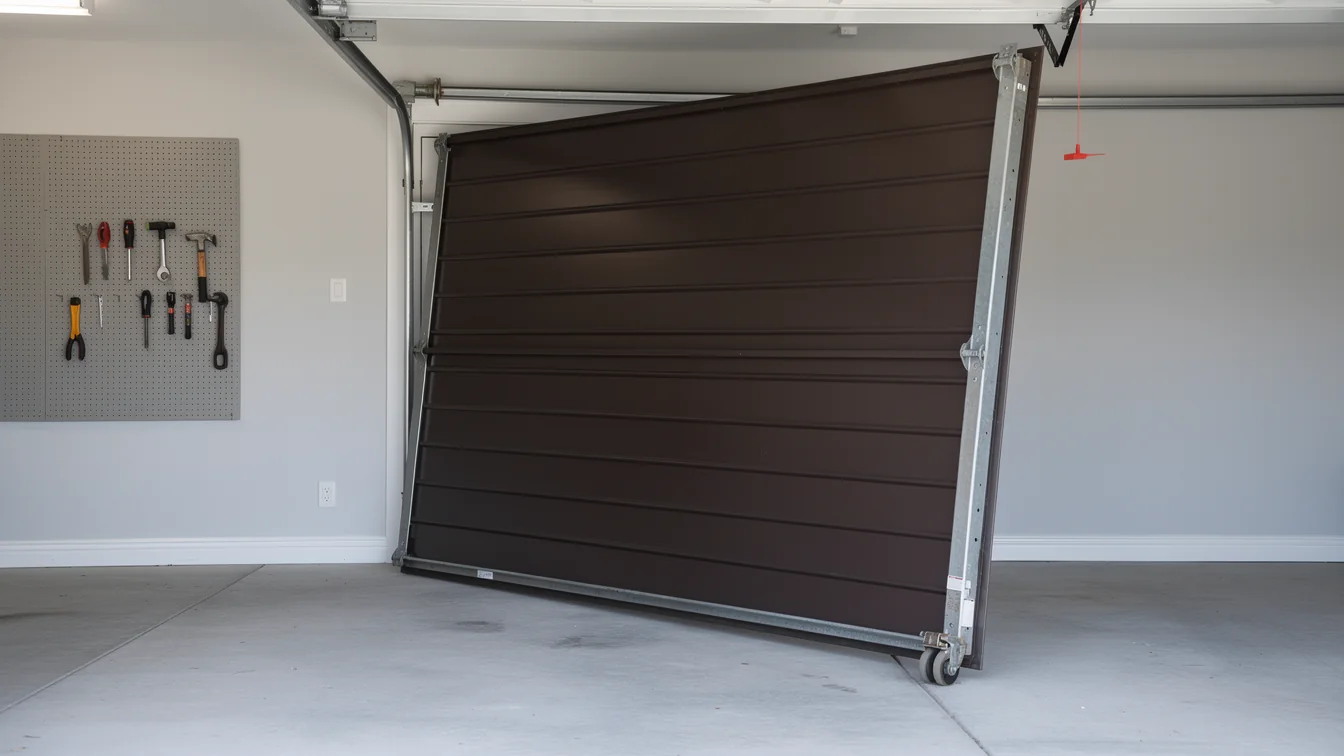
Most of the garage doors we look at around Trenton were hung on track that's older than the people living in the house. Housing in this area runs from 1938 up through 2004, with the median build year landing around 1968, and most of the stock in the 57 neighborhoods we cover is 1960s-to-70s construction. That matters because a door doesn't go off track from one bad day. It goes off track from years of small things stacking up: a roller that's worn thin, a track bracket that's loosened a sixteenth of an inch at a time, a bottom panel that's sagged just enough to pull the rollers out of line. On a door that age, the track itself has usually never been replaced, only reused when the opener or springs got swapped. Once a roller starts riding the edge of the track instead of sitting square in it, every open and close wears the groove a little wider until one day it jumps clean out. By the time you hear the bang or see the door hanging crooked, the wear has usually been building for a year or more.
What the Weather Here Does to It
This area sits in a cold-severe climate band, and that does specific things to a door's moving parts that owners don't always connect to the symptom. Steel track contracts in hard cold, and a track that was already a little bowed or loose from age pulls tighter at the joints and brackets in January than it does in July, which is exactly when a borderline alignment finally gives out. Grease inside rollers and hinges thickens up in the cold too, so the door doesn't glide, it drags, and a dragging roller is a roller that's more likely to climb the track lip instead of rolling through it smoothly. We also see ice collect at the bottom track on doors that don't seal well against the slab, and a roller hitting even a thin ridge of ice can hop the rail instantly. None of this is dramatic weather - it's just steady cold doing its slow work on hardware that was already carrying thirty or forty years of use.
The Common Mistake
The mistake we see most is someone forcing a stuck door, either by hand or by running the opener against resistance. If a door with 1960s or 70s track hardware starts binding, especially on a cold morning, the instinct is to muscle it or hit the remote again and again. Every one of those forced cycles bends the track a little further out of true. What would have been a bracket adjustment and a roller swap turns into a bent section of track that has to come out entirely. We also see people spray general lubricant on everything, including the track itself, which just gives dust and grit somewhere to stick and build up a ridge the rollers then have to climb over. The honest limit here: if a track has already bent enough to show daylight between it and the roller, straightening it rarely holds for long on hardware this old, and replacing that section is usually the better money than repeated adjustments.
When Waiting Is Fine
Not every off-track sign means stop using the door today. A door that's slightly noisier in cold weather, or one roller that looks a touch crooked but still rolls true, can usually wait for a scheduled look rather than an emergency call. If the door still opens and closes on a level path and the track shows no visible gap or bend, you're looking at wear to watch, not a failure in progress. Given how much of the housing here is original 1960s-70s stock, a lot of these doors are simply due for a hardware check rather than a dramatic fix. Where we'd tell you not to wait: if the door is visibly tilted when open, if a roller has already left the track, or if you hear a grinding or popping sound during the cycle. Those are signs the track or a roller is actively failing, and running the door again risks turning a track repair into a full section replacement.
Frequently asked questions
Why does my garage door only jump off track in winter?
Cold tightens steel track at the brackets and thickens the grease in your rollers, so a door that was already slightly misaligned from age has less give in freezing weather. In this climate band, winter just exposes wear that was already there - it doesn't cause it by itself.
Is my garage door track original to the house?
If your house was built in the 1960s or 70s, which is common across this area, there's a good chance the track has only been adjusted or partially replaced over the years, not fully swapped. Original track that old is more prone to bowing and bracket wear.
Can I fix a bent track myself?
On older hardware, straightening a bent section rarely holds, since the metal has already fatigued from decades of use. We'd rather tell you that upfront than have you spend an afternoon on a fix that fails again in a month.
How do I know if it's an emergency?
A door that's visibly crooked when open, a roller that's already off the rail, or a grinding sound during the cycle all mean stop using the door and get it looked at. Minor noise or stiffness in cold weather can usually wait for a scheduled visit.
Related garage door services in Trenton
More garage door guides
Book garage door service in Trenton
Call now or request a quote - tell us what the door is doing and where you are.