
Trenton, NJ · Garage Door Service
Worth Fixing or Worth Replacing? A Trenton Homeowner's Guide
A Trenton homeowner's guide to telling a worn-out garage door from one still worth repairing, built around this area's housing age and cold winters.
- Repairs & new doors
- Springs & openers
- Serving 7 nearby communities
The Problem
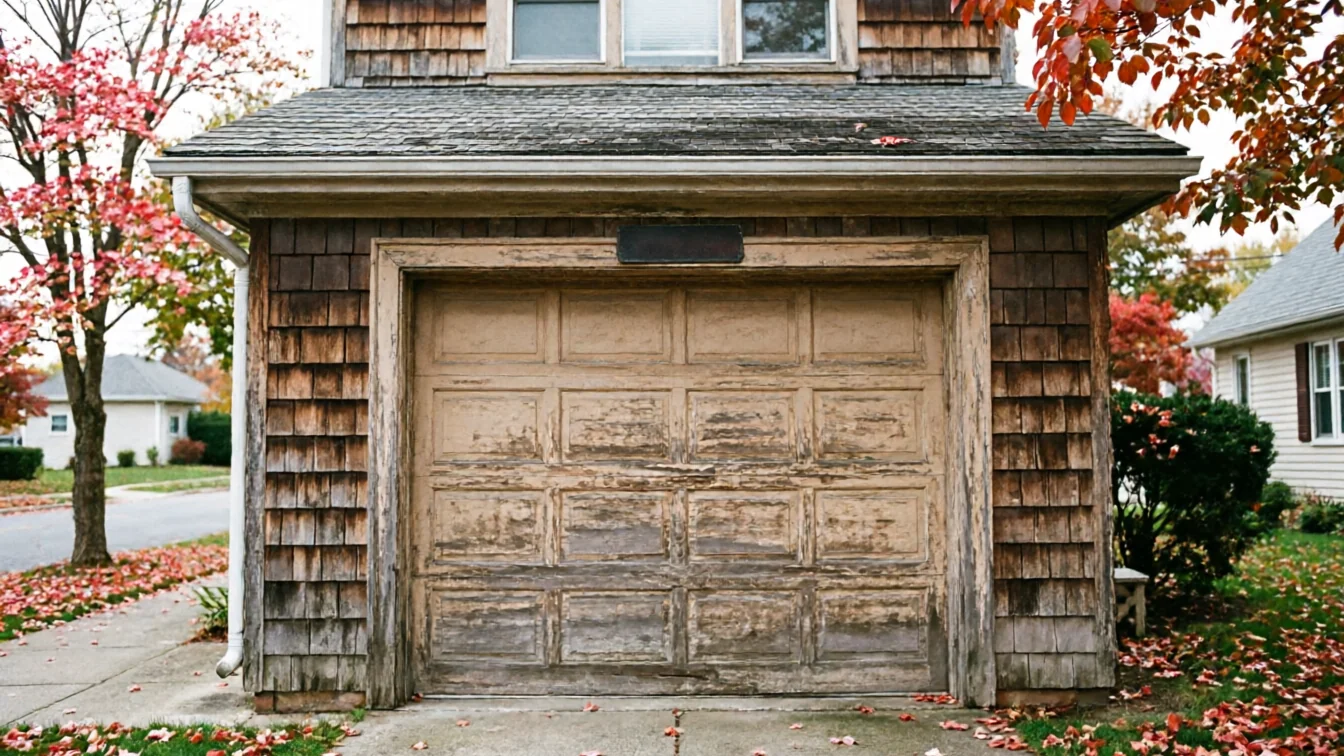
Trenton's housing stock runs from 1938 to 2004, with the median build year sitting at 1968. That's not a small detail. It means a big share of the garage doors we look at are original to the house or close to it - single steel skin, no insulation, steel tracks that have been painted over three or four times. Across the 57 named areas that make up this service area, the bulk of the stock still dates to the 1960s and 70s, so the doors we're called on aren't usually five years old with a bad sensor. They're forty-plus years old with a spring that's never been replaced and a bottom panel that's rusted through from the inside out.
The question homeowners ask isn't "what's wrong with my door," it's "is this thing worth saving." And the honest answer depends on what's actually failed. A spring, a cable, a set of rollers - those are wear parts, and replacing them on an otherwise sound door is real money saved. A warped panel, a track bent from a car backing into it, or a frame that's rotted at the base is a different conversation. The door's age tells you which conversation you're likely having before we even get there.
What the Weather Here Does to It
Trenton sits in a climate band the federal data marks as cold and severe, and that matters more for garage doors than people think. A torsion spring is rated for a set number of cycles, but cold makes steel brittle and tightens tolerances in the track. A spring that's lost even 10% of its tension starts binding hard on the first cold morning of the year, and binding is what snaps cables and cracks spring ends, not just age by itself.
On a 1960s or 70s door with no thermal break at the bottom seal, that cold also works on the wood or steel jamb around the opening. Panels on older doors here tend to show their wear in winter first - a door that rolled fine in October starts groaning or catching by January because the hardware has tightened up and the weatherstrip has gone stiff. None of this is dramatic. It's steady, and it's the reason a lot of the repair calls we get cluster in the cold months rather than spread evenly through the year. If your door's acting up right now and it didn't in summer, that's data, not bad luck.
The Common Mistake
The mistake we see most in this area is homeowners fixing the wrong half of the problem. Someone replaces the opener because the door is loud or slow, when the actual issue is a spring that's lost tension and is making the opener's motor do work it was never built for. The opener gets swapped, the door's still loud, and now there's a new motor straining against the same bad spring.
The other direction happens too - someone keeps throwing new springs at a door whose track is bent or whose rollers are shot, and the spring keeps failing early because it's fighting resistance somewhere else in the system. On the older stock common here, from the 1938-2004 range with a 1968 median, the components tend to fail as a set, not one at a time, because they were installed together and have logged the same decades of cold winters. Checking the whole run - track, rollers, cables, spring, opener - before replacing any one piece is the only way to know what you're actually paying for. With median household income in this area at $107,431 and 93,152 owner-occupied houses to go around, plenty of owners can afford either path. The point is spending it on the right part.
When Waiting Is Fine
Not everything needs a call this week. A door that's cosmetically dented but still opens smoothly, seals fine, and isn't binding can wait - fixing a dent is about appearance, not function, and it's fair to put that off until it bothers you enough to spend on it. A slightly noisy door on an older home, if the noise hasn't changed in months, is often just age talking, not a sign of imminent failure.
Here's the honest limit on our end: we don't stock every part for every door built in the 1938-2004 range that makes up most of this area's housing. Some older tracks and hardware patterns take time to source, and if yours is one of them, waiting a few extra days for the right part beats forcing a mismatched one onto an original frame. If you're out toward Mercerville or White Horse, both about 4 miles from Trenton, you're looking at the same 1960s-70s build era, so the same waiting logic applies there too. The thing that can't wait is a spring that's already audibly straining or a cable showing frayed strands - that's a safety call, not a scheduling one.
Related garage door services in Trenton
More garage door guides
Book garage door service in Trenton
Call now or request a quote - tell us what the door is doing and where you are.