Trenton, NJ · Garage Door Service
Garage Door Repair for Montgomery, NJ
Montgomery's garage doors are mostly 1990s builds, not 1960s stock like the rest of the Trenton service area. Here's what actually breaks and what's on the truck.
- Repairs & new doors
- Springs & openers
- Serving 7 nearby communities
What Is on the Truck
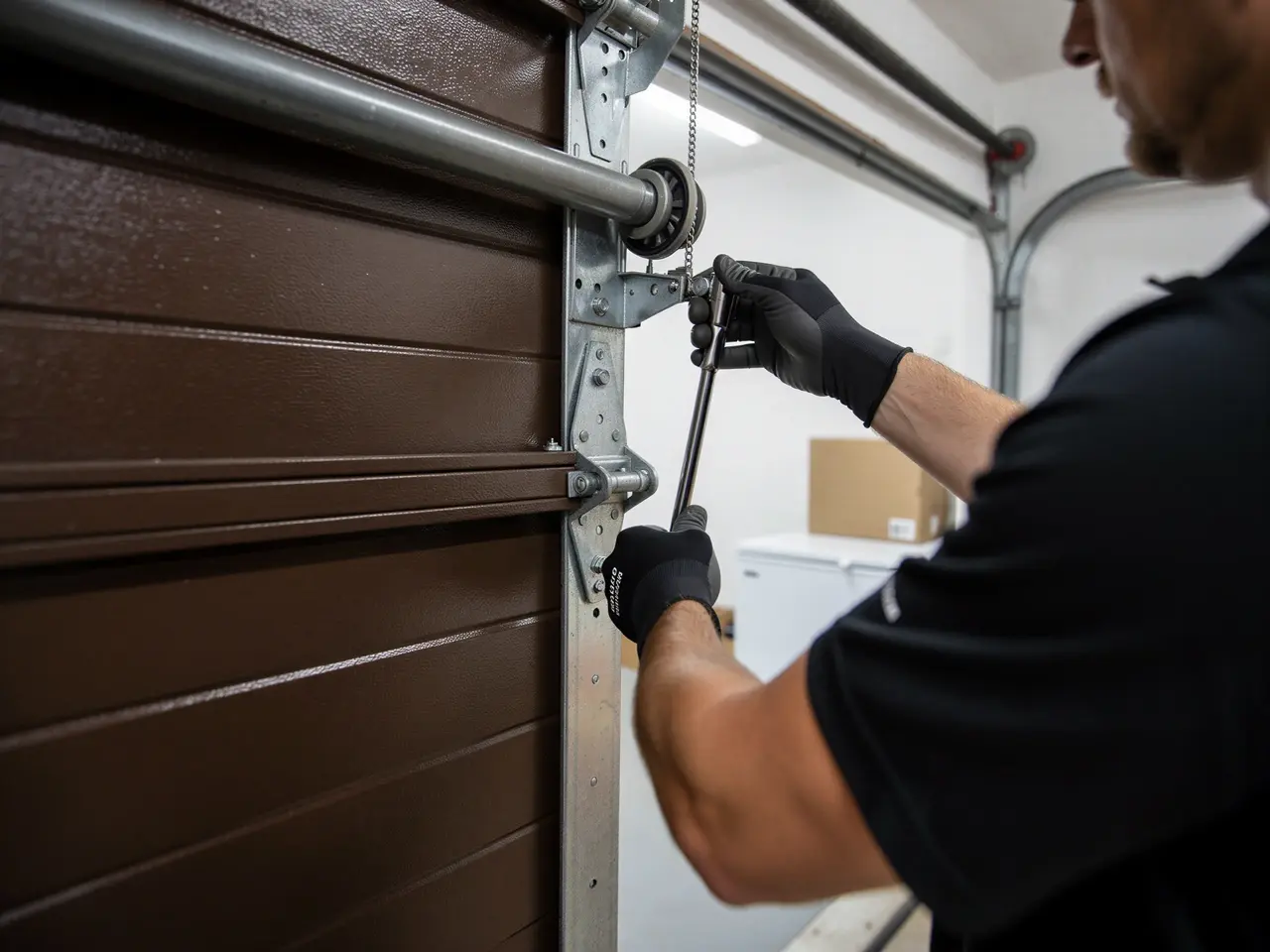
Montgomery is a small town by household count, about 8,368 of them, so a single call out here doesn't look like a dozen calls in a denser part of the service area. That changes what we load before we drive the 15 miles out from Trenton. We're not stocking parts for the oldest torsion setups you'd find on 1960s one-piece doors near the shop. Montgomery's median year built is 1993, which puts most garages here on sectional steel doors with factory-standard extension or torsion springs, lighter-gauge track, and openers that were still using plastic drive gears and basic chain or belt drives. Given the income level out here, $223,409 median, we also see more upgraded two-car and three-car door setups, insulated panels, and newer Wi-Fi openers added on top of original hardware. That means the truck carries both the extension-spring kits those builder-era doors actually use and the sensor and circuit board parts for openers that got swapped out later. What we don't load heavy for is the oldest cable drum and bearing plate hardware - it's rare to find it still in service on a house built in 1993.
How Long You Are Without the Door
We run this job from Trenton, 15 miles away, so Montgomery isn't a corner-of-the-neighborhood stop the way some closer towns are. There's no branch or standing crew based in Montgomery itself - every job here starts with a drive. Once the tech is on site, the actual repair time depends on what's wrong more than where the house is. A broken extension spring or a bad sensor is usually a same-visit fix once we're there with the right part. A failed opener board that needs a specific replacement part is the one that can stretch past a single visit if the part isn't something we carry standard on the truck.
Where This Job Goes Sideways
The most common misdiagnosis on a 1990s-built door is treating it like the older torsion systems we see closer to Trenton. Builder-grade doors from this era often run on extension springs mounted above the horizontal track rather than a torsion bar over the opening, and the repair approach, and the safety steps, are different. Try to fix an extension-spring door with torsion-bar logic and you can end up replacing the wrong part or, worse, working under a loaded spring the wrong way. The other place it goes sideways is the opener, not the door itself. Higher-income homes out here tend to have had openers upgraded independent of the door - a newer unit bolted onto original 1990s track and hardware. If a tech only looks at the opener's age, they can miss that the real wear is in 30-year-old rollers or a track that's never been realigned since the house was built.
Why This Fails Locally
Montgomery sits in the same cold-climate band as the rest of the service area, and winter is what finds the weak point in a door that's otherwise held up fine for three decades. Steel panels contract in the cold, extension springs lose tension faster than torsion springs when they're left unlubricated, and nylon rollers from the original builder install turn brittle well before the door itself shows any other sign of age. None of that is unique to Montgomery, but because the housing stock here clusters so tightly around 1993, the failure pattern is unusually consistent: it's springs and rollers first, openers second, and the track itself rarely needs real work before the other two parts have already failed once.
How It Shows Up
The call we get from this part of the service area is usually one of two things: a door that won't lift because a spring let go overnight in the cold, or a door that runs rough and loud, catching partway up, because the original rollers have gone brittle. Less often it's an opener that's stopped responding, which on a 1990s door with a later opener swap usually traces back to the sensor wiring or the logic board rather than the motor itself. We don't see much call for structural track or panel replacement out here yet - the housing is still young enough that it's mechanical wear parts failing, not the door's frame or construction.
Frequently asked questions
Is Trenton Garage Door Pros based in Montgomery?
No. We work out of Trenton and drive the 15 miles to Montgomery for calls. There's no local branch here, so every job starts with that drive, and we plan the truck's parts load around what Montgomery houses from the early '90s actually need.
Why does my 1990s garage door need different parts than my neighbor's older house in another town?
Montgomery's housing centers on a median build year of 1993, while much of the wider Trenton service area dates to the 1960s and 70s. Different eras used different spring types and track hardware, so a repair built around older torsion systems often doesn't fit a builder-grade door from this period.
What's the most common garage door problem in Montgomery?
Extension springs failing in cold weather and rollers gone brittle from age are the two we see most, both tied to the original 1990s-era hardware still in place on a lot of these houses.
More garage door services in Montgomery
Book garage door service in Trenton
Call now or request a quote - tell us what the door is doing and where you are.