Trenton, NJ · Garage Door Service
Garage Door Repair for Yardville's 1960s Housing Stock
Garage door repair for Yardville homes built mostly in the 1960s. We come from Trenton, 6 miles out, and know the torsion hardware this era used.
- Repairs & new doors
- Springs & openers
- Serving 7 nearby communities
Doing It Yourself
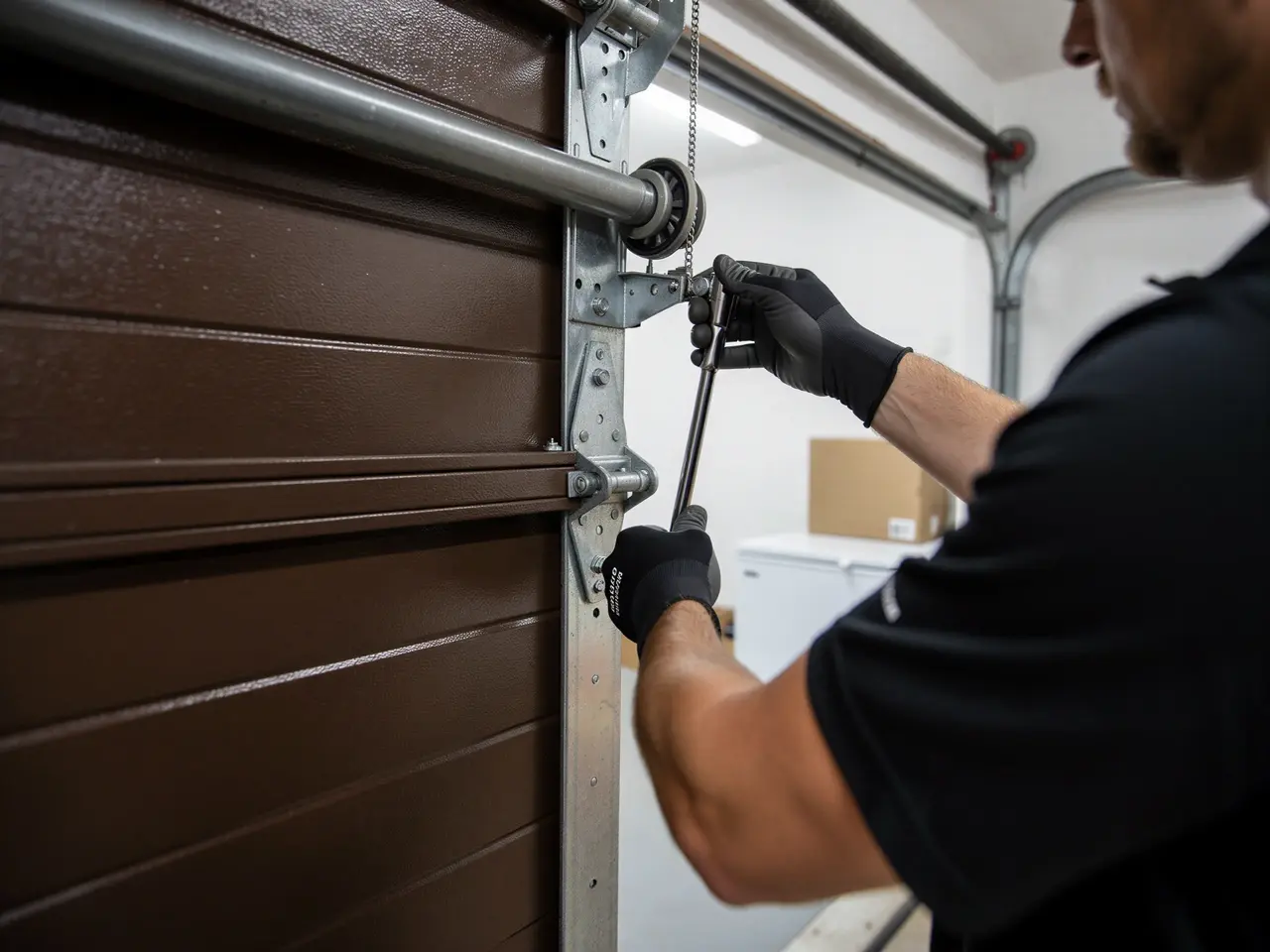
Yardville's median household income sits at $100,776, a notch under the wider Trenton-area figure of $107,431 from the Census data. At that income, a full door replacement is a real expense to weigh carefully, which is why we start most calls asking what actually broke before we talk about swapping the whole unit. A snapped cable, a bent hinge, or a worn roller on a door built in the 1960s is almost always a repair, not a replacement. Where the math shifts is the opener and the track together failing on the same visit, or a panel that's rusted through at the bottom - at that point you're paying labor twice to patch something that needs replacing anyway. We'll tell you straight when a repair isn't worth it instead of running up a bill on a door that's going to need the same fix again next winter. YouTube makes spring work look simple. It isn't - a torsion spring under tension has put people in the ER, and on the original hardware common in houses from this era, the winding cones are often undersized by today's standard, which makes them less forgiving, not more.
How Long You Are Without the Door
We run out of Trenton, about 6 miles from Yardville, so there's no local branch sitting idle waiting for a call - we schedule the drive into the route for the day. That's a real factor if your door is stuck open or stuck shut and you need it secured before you can leave for work. We don't promise a same-hour window because we haven't been given one to promise, but we do ask up front what the door is currently doing - open, shut, half-track - because that changes how we stage the truck before we leave Trenton. A door stuck open overnight in a cold-climate winter is a different problem than one that's just noisy, and we triage the call list accordingly.
Why This Fails Locally
Housing in this part of the service area runs from 1938 to 2004 with a median build year of 1968, and Yardville's own stock centers closer to 1965. That matters for one reason: doors and openers from that build window were sized and sprung for garages that are, on average, lighter-use and narrower than what gets built today. Combine that with a severe cold climate band and you get steel that contracts hard every winter - springs lose a measurable amount of lift in sustained cold, and galvanized cable on 50-plus-year-old drums starts to fray at the same spots every time. We see a specific failure pattern on this housing era: the extension spring setup (common before torsion became standard) rusting at the end hooks faster than the coil itself, because that's where moisture sits. That's a Yardville-era problem, not a generic garage door problem.
How It Shows Up
On a house from this build era, the first sign is usually the door reversing itself a few inches off the floor instead of closing all the way - that's the opener's travel limit fighting a spring that's lost tension, not an opener fault. The second pattern is a grinding noise specifically on the way up, which on this vintage of track usually means the roller stems have worn oblong in the bracket, not that the roller itself is bad. Owners often replace the roller and the noise comes right back inside a month, because the bracket was the actual wear point. A third sign, more common once a door's original hardware has run two or three decades past its build date, is the door dropping unevenly on one side when the opener's chain or belt is still perfectly fine - that's a cable or drum issue, not a motor issue, and it gets worse fast if the door keeps getting cycled.
What Is on the Truck
Because the housing stock here skews to the mid-1960s, we stock torsion springs and extension spring kits sized for the narrower, lighter doors common on houses built before the mid-1980s shift to wider two-car openings - that's not inventory every outfit carries as standard. We also carry galvanized cable in the gauges that match older drum setups, since the cable sold with most modern opener kits is cut for newer, wider track. One honest limit: specialty panels for doors that are discontinued or custom-sized sometimes aren't something we carry on the truck, and those can mean a lead time while we source a match rather than a same-visit fix. We'd rather tell you that up front than have you wait on a truck that can't finish the job.
Frequently asked questions
Is it worth replacing a garage door on an older Yardville house instead of repairing it?
Usually not, if the problem is a single part - a spring, cable, or roller. Full replacement starts making sense when the opener, track, and panel are all failing close together, or when the door is rusted through at the bottom corners. At Yardville's income levels, we try repair first and tell you honestly when it won't hold.
Why does my garage door stick more in winter?
This area sits in a severe cold climate band, and steel springs lose measurable lift in sustained cold. On older torsion or extension setups common in houses built here in the 1960s, that loss of tension shows up as a door that reverses before fully closing or feels heavy to lift by hand.
Do you have a branch in Yardville?
No. We run out of Trenton, about 6 miles away, and schedule Yardville calls into the day's route. We don't advertise a local response time because we don't have a depot here to promise one from.
Why does the noise come back after I replace just the roller?
On doors from this build era, the roller bracket itself often wears oblong from decades of use, not just the roller. Replacing the roller alone leaves the worn bracket in place, so the grinding returns within weeks. The bracket needs replacing alongside the roller.
More garage door services in Yardville
Book garage door service in Trenton
Call now or request a quote - tell us what the door is doing and where you are.