Trenton, NJ · Garage Door Service
Spring Repair for Yardville's 1960s Housing Stock
Yardville's 2,655 households sit mostly on 1960s-70s builds with torsion springs sized for a different era. Trenton Garage Door Pros drives the 6 miles out for same-day spring jobs.
- Repairs & new doors
- Springs & openers
- Serving 7 nearby communities
Doing It Yourself
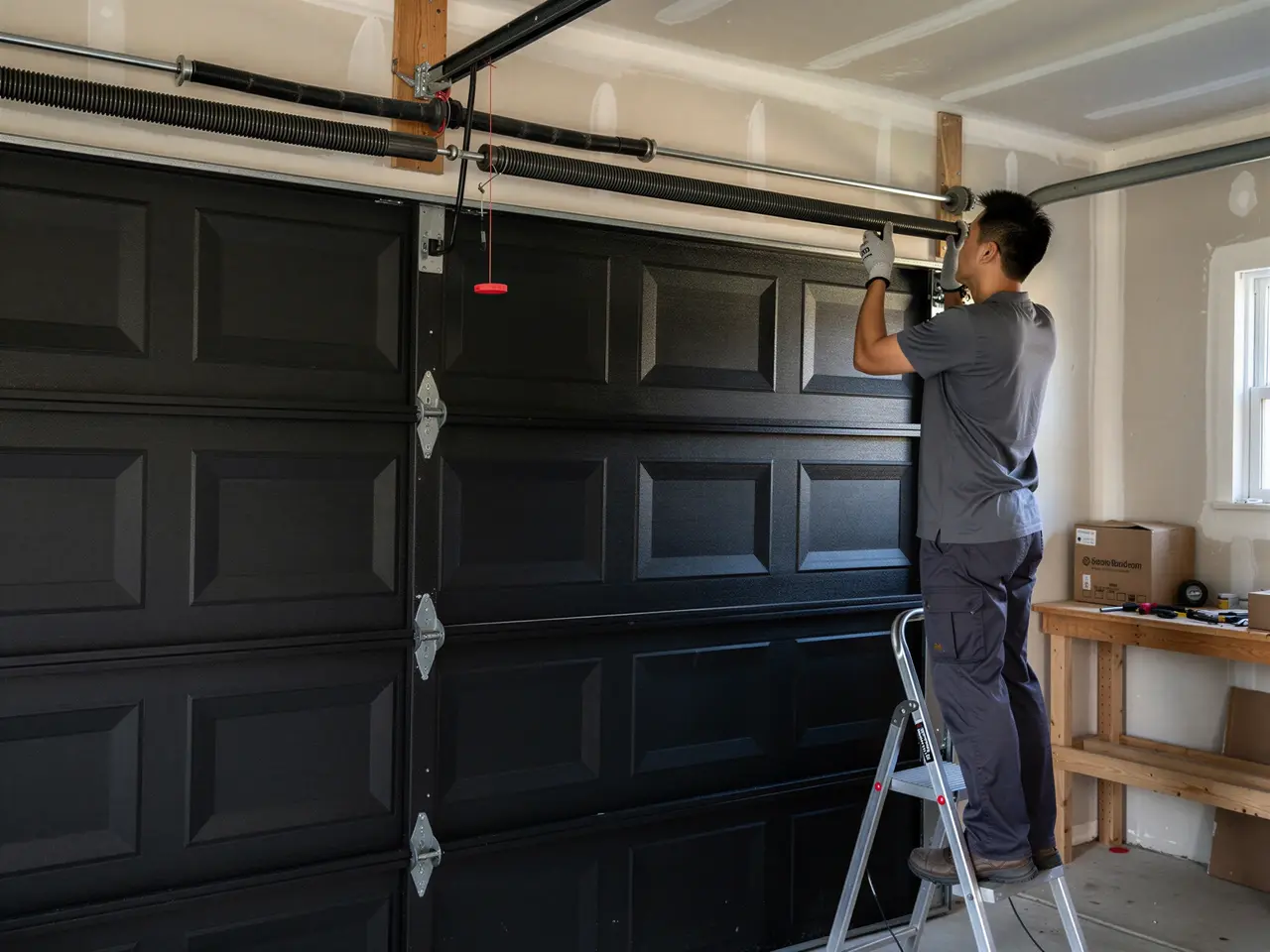
Yardville is a small place - about 2,655 households, which means the spring jobs we get called for here tend to repeat: same door widths, same torsion setups, same age of hardware, because the houses went up around the same stretch of years. That repetition is exactly why we'd tell you not to try this one yourself. A wound torsion spring holds enough force to snap a bar or take a finger, and on a double door sized for a 1960s build, the cable drums and shaft are under real tension even with the door down. Unplugging the opener does nothing to release that stored energy. If you're the type who replaces your own water heater, fine - this isn't that kind of job. The spring, the winding bars, and the cone sizing all have to match, and guessing wrong on cone size is how a repair turns into a trip to the ER. We're not saying this to upsell a service call. We're saying it because the failure mode here is specific: a spring sized wrong for a door this age binds the drums, and now you've got a bent shaft on top of a broken spring.
How Long You Are Without the Door
Once a torsion spring lets go, the door is effectively a 150-to-200-pound panel with nothing holding it up but the opener motor - which isn't built for that load and will fail next if you keep running it. That's the real cost of waiting: one broken spring job can turn into an opener replacement if the door gets forced up and down a few more times. We come from Trenton, six miles in, so we're not a local branch with a truck sitting on your street, but a spring job itself - once we're there with the right parts for the door - is typically finished same visit. The time you lose is mostly decision time: deciding not to keep opening a door that's unsupported.
Why This Fails Locally
The median home in Yardville was built around 1965, which lines up with the wider pattern across this corner of the service area - most of the stock here is 1960s and 70s construction. Doors from that era were commonly fitted with torsion springs sized to lighter, single-layer panels, not the heavier insulated doors a lot of owners have since swapped in. When a homeowner upgrades to a heavier door but keeps the original spring sizing - or a prior repair used a stock size instead of matching the door's actual weight - the spring is working harder than it was built for, and it fails sooner. On top of that, this area sits in a cold, severe winter climate zone. Steel springs lose temper faster when they're cycling through hard freezes and thaws, and the coil contracts in cold air, adding stress right at the moment you need the door most. A spring rated fine in a mild climate wears out faster here. It's not one cause - it's an older door, a mismatched spring, and a winter that doesn't let up, stacking on each other.
How It Shows Up
Most calls start the same way: the door won't budge, or it goes up a few inches and stops. Sometimes there's a loud bang from the garage first - that's the spring itself letting go, usually when the door is in the down position overnight in cold weather. Other times it's gradual: the opener strains harder each week, makes a grinding sound at the top of the arc, or the door feels heavier lifting it by hand before it fails outright. On older torsion setups common to houses built in the mid-60s, you'll also see a visible gap in the coil when the spring has separated - easy to spot once you know to look for it on the shaft above the door. If your door is sagging unevenly on one side when it's down, that's often one spring on a two-spring system going first, with the other not far behind.
What Is on the Truck
We carry a working range of torsion spring sizes to cover the door weights and shaft diameters common to houses from the 1960s and 70s era, plus the heavier-gauge springs that fit newer insulated replacement doors on older framing. We stock winding bars, cable, and drums sized to match - because a spring swap done without checking the drums and cable condition is a callback waiting to happen. What we don't carry is every custom spring size for a non-standard or imported door; those sometimes mean a short order delay if the door isn't a standard width or lift type. We'll tell you up front if that's the case rather than force a size that's close but wrong.
Frequently asked questions
How old does a garage door spring usually last in Yardville?
It depends more on cycles than age, but the cold winters here shorten spring life compared to milder climates. Combined with a lot of homes still running original or early-replacement torsion springs sized for 1960s doors, we see more wear-driven failures than you'd expect for a town this size.
Do you have a branch in Yardville?
No - we run out of Trenton, about 6 miles away, and drive out for the job. We don't keep a depot or crew stationed in Yardville itself, just the truck stock to handle the spring sizes common to this area's housing.
Can I just replace one spring if I have a two-spring door?
You can, but we don't recommend it. If one spring failed from age or fatigue, the matching spring on the other side is usually close behind, and the cost difference to do both now versus a second call in a few months rarely favors waiting.
More garage door services in Yardville
Book garage door service in Trenton
Call now or request a quote - tell us what the door is doing and where you are.